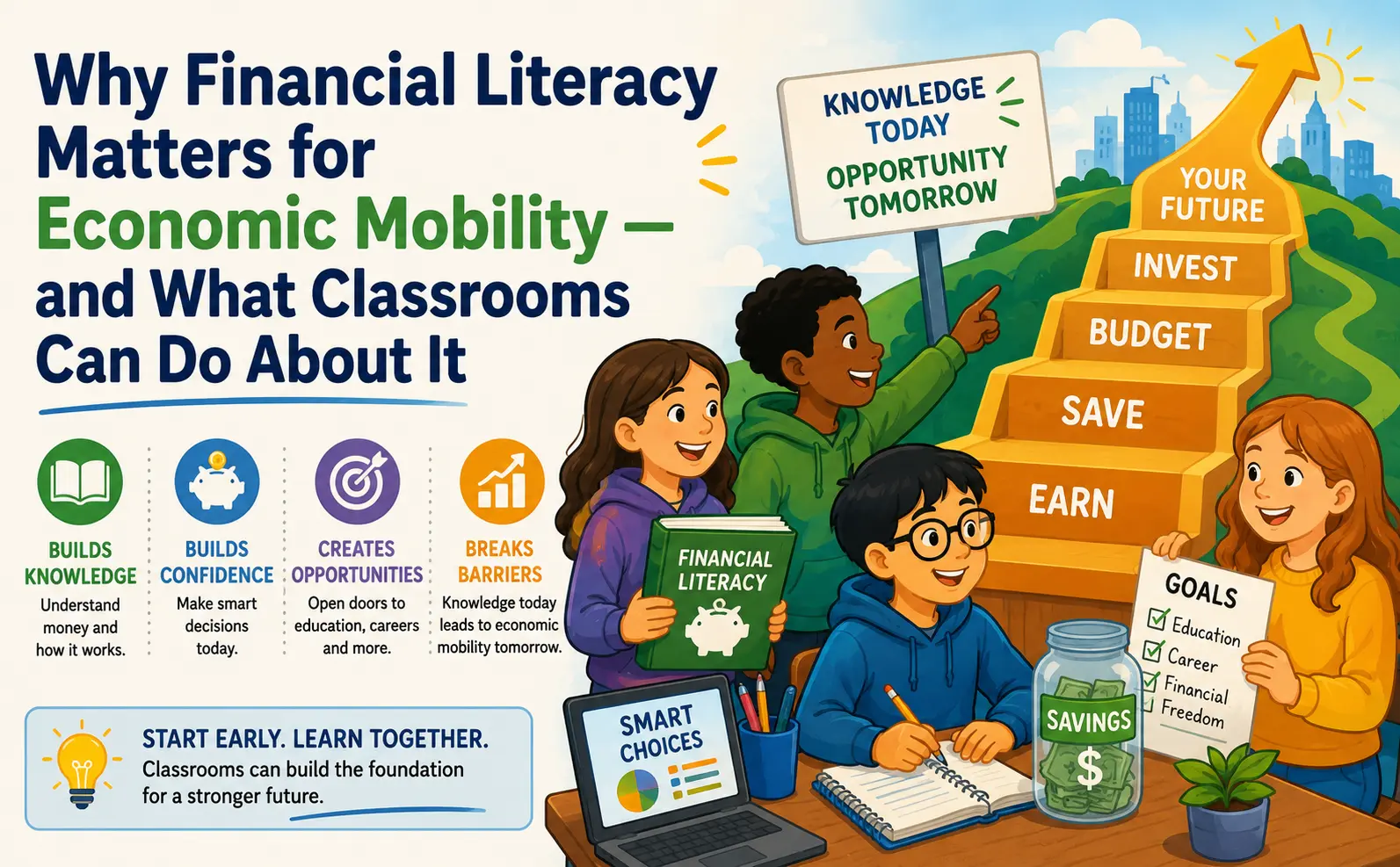
A classroom economy can be more than a reward system.
When done well, it becomes a hands-on way for students to practice real-world money skills: earning, saving, spending, budgeting, paying bills, setting goals, and making thoughtful financial choices.
That is the idea behind Fun Banking. Instead of relying on paper dollars, spreadsheets, or a simple points system, teachers can give students a safe, digital banking experience that feels familiar without involving real money.
Students get to manage accounts, track balances, make purchases, receive bonuses, pay bills, and understand how financial decisions affect them over time.
The best part? You do not need to build a complicated system from scratch.
What Is a Classroom Economy?
A classroom economy is a simulated economy inside your classroom.
Students can earn classroom currency for things like:
- Completing jobs
- Showing positive behavior
- Helping classmates
- Participating in class
- Meeting academic goals
- Taking responsibility for classroom routines
They can then use that currency to make choices, such as saving for a larger reward, buying something from the classroom store, paying a classroom bill, or transferring money to another student.
The goal is not just to motivate students. The goal is to help students understand how money works in a way that feels practical and memorable.
Why Classroom Economies Work
Students learn best when they can connect an idea to something they actually do.
A worksheet about budgeting can be useful, but managing a balance over several weeks is different. Suddenly, students are asking questions like:
- “Should I spend now or save for later?”
- “Can I afford this?”
- “How much will I have left?”
- “What happens if I miss a payment?”
- “How can I earn more?”
- “Is this purchase worth it?”
Those questions are exactly where financial literacy starts.
A classroom economy gives students a low-risk place to practice those decisions before they face them in the real world.
Start Simple: Accounts, Earnings, and Spending
One mistake teachers sometimes make is trying to launch every part of a classroom economy on day one.
You do not need jobs, rent, taxes, interest, stores, bonuses, fines, auctions, loans, and a full classroom marketplace immediately.
Start with three basics:
- Students need a way to earn money.
- Students need a place to keep their money.
- Students need a reason to use their money.
With Fun Banking, that can be as simple as creating a classroom bank, adding students as customers, and giving each student a checking or savings account.
From there, you can begin with basic deposits and withdrawals.
For example:
- Deposit $10 for completing a classroom job
- Deposit $5 for helping clean up
- Withdraw $15 for a classroom store item
- Withdraw $25 for a special privilege
- Add a bonus for excellent teamwork
Once students understand the basics, you can add more depth.
Build a Classroom Store Students Care About
A classroom store gives the economy purpose.
Students are much more likely to care about earning and saving when there is something meaningful to spend their money on.
Your store does not have to be expensive. In fact, many of the best classroom rewards cost nothing.
Consider adding rewards like:
- Choose your seat for a day
- Pick the class warm-up question
- Homework pass
- Lunch with the teacher
- Extra computer time
- Line leader for the day
- Wear a hat in class
- Choose a class brain break
- Bring a stuffed animal to class
- Help lead a classroom activity
You can also add physical items if that works for your classroom, but the most important part is giving students choices.
A classroom store teaches students that money is connected to decision-making. They begin to compare prices, save toward goals, and think before spending.
Use Bills and Bonuses to Teach Responsibility
Once your students understand earning and spending, bills and bonuses can make the system feel more realistic.
Bonuses are great for reinforcing the behaviors you want to see more often. Bills can represent recurring responsibilities inside the classroom economy.
For example, students might receive bonuses for:
- Turning in work on time
- Helping a classmate
- Showing leadership
- Staying organized
- Participating respectfully
- Improving on a personal goal
Bills might represent things like:
- Desk rent
- Supply fees
- Technology fees
- Classroom utilities
- Late fees
- Store restocking fees
The point is not to punish students. The point is to help them see that money often has responsibilities attached to it.
Fun Banking makes this easier by letting teachers manage billing, bonuses, and account activity digitally instead of trying to track everything by hand.
Teach Saving With Goals
Saving is one of the most valuable habits students can practice.
In a classroom economy, saving becomes visible. Students can see their balance grow. They can compare short-term spending with long-term goals. They can decide whether to buy something small today or wait for something better later.
You can make saving more meaningful by creating store items at different price levels.
For example:
- Small rewards: $10–$25
- Medium rewards: $50–$100
- Big rewards: $150–$300
- Class auction items: $500+
This gives students a reason to plan.
Some students will spend right away. Others will save carefully. Both choices create teachable moments.
Instead of telling students what budgeting means, you can ask:
“What are you saving for?”
“How many more deposits do you need?”
“What will happen if you buy this today?”
“Is this worth the price?”
That kind of reflection is where the real learning happens.
Make It Student-Led Over Time
A classroom economy becomes even stronger when students help run it.
As the system grows, consider assigning classroom jobs that connect directly to the economy:
- Banker
- Store manager
- Accountant
- Payroll assistant
- Receipt checker
- Inventory manager
- Loan officer
- Treasurer
These jobs help students take ownership of the system. They also make the economy feel like part of the classroom community instead of just another teacher-managed tool.
Fun Banking works especially well here because students can interact with a realistic banking-style system while the teacher still stays in control.
Use Statements and Transaction History for Reflection
One of the most underrated parts of a classroom economy is the transaction history.
When students can look back at their deposits, withdrawals, purchases, payments, and balances, they can start to notice patterns.
A student might realize:
- They spend money as soon as they earn it
- They are close to reaching a savings goal
- They earn more when they complete jobs consistently
- Their bills affect their available balance
- Small choices add up over time
Fun Banking includes bank statements and transaction tracking, which can turn classroom economy activity into quick reflection opportunities.
You might ask students to review their statement and answer:
- What was your best financial choice this month?
- What is one thing you wish you had done differently?
- Did you save more or spend more?
- What is your next financial goal?
- How can you earn more next month?
This turns the classroom economy into more than a behavior tool. It becomes a financial literacy routine.
Keep the System Flexible
Every classroom is different.
Some teachers want a simple classroom store. Others want a full economy with jobs, bills, accounts, peer-to-peer payments, savings goals, and more advanced financial lessons.
The best system is the one you can actually maintain.
Fun Banking is built to support different classroom styles. You can start small and add more features when your students are ready.
You might begin with checking accounts and deposits, then later introduce:
- Savings accounts
- Classroom stores
- Recurring bills
- Bonuses
- Peer-to-peer payments
- Bank statements
- Credit cards
- Loans
- Custom classroom currency
- School accounts
- Contributors who help manage banks
That flexibility matters because a classroom economy should make your life easier, not harder.
A Simple First-Week Plan
If you are new to classroom economies, here is a simple way to launch.
Day 1: Introduce the Economy
Explain that your classroom will have its own economy. Students will earn money, manage accounts, save for rewards, and make financial decisions.
Keep the explanation simple. The goal is excitement, not perfection.
Day 2: Create Accounts
Add your students to Fun Banking and introduce their accounts. Show them how balances work and explain that every deposit or withdrawal changes their total.
Day 3: Add Earning Opportunities
Create a short list of ways students can earn money. Start with positive behaviors and classroom jobs.
Example:
- $5 for helping the class
- $10 for completing a job
- $15 for excellent teamwork
- $20 for going above and beyond
Day 4: Open the Store
Introduce a few classroom store items or privileges. Include low-cost and higher-cost options so students can choose whether to spend or save.
Day 5: Reflect
Have students check their balances and set a goal.
Ask:
- What do you want to save for?
- How much do you need?
- What can you do next week to earn more?
By the end of the first week, students will already understand the basic cycle: earn, save, spend, reflect.
Final Thoughts
A classroom economy does not need to be complicated to be powerful.
At its best, it gives students a reason to take ownership of their choices. It connects behavior, responsibility, and financial literacy in a way that feels real.
Fun Banking helps teachers bring that experience to life with a digital banking simulator built for classrooms. Students can manage accounts, interact with a classroom store, review transactions, receive bonuses, pay bills, and practice money skills in a safe environment.
Start simple. Let students learn by doing. Add more features as your classroom economy grows.
The lessons students practice today can become the habits they carry into the future.